

22 December 2015 - Many of the measures included in the 2016 Stability Law addressed the activities of Ministry of Infrastructures and Transport, led by the Minister Graziano Delrio, towards sustainability principles.
Besides the renewal of ANAS (the Italian National Roads Authority) and RFI (Italian Railway Network) contracts, as pointed out in Table E, as well as the financing of the projects selected by the Infrastructure Annex or identified in the Program Agreements, where the largest amounts of money are allocated, the most distinguishing measures adopted, along with some special ones are described as follows.
HOUSING – ECO-BONUS AND URBAN REQUALIFICATION PROJECTS
In addition to the measures adopted by the Government on main home and tax allowances, as well as those ones relating the debt restructuring for non-performing loans and the finance lease of main home properties, the other measures based on sustainability principles proposed by the Ministry of Infrastructures and Transport (MIT), by the Parliament or which were agreed at inter- ministerial level for the benefit of the housing policy and the rights to housing are described below.
Eco-bonus
- Extension for the year 2016 of Eco-bonus’ tax detractions for privates: of which, 65 percent are foreseen for energy upgrading works and 50 percent for renovation projects along with the related purchase of furniture;
- IRPEF (Personal income tax) deduction of 50 percent on VAT (value added tax) payment to purchase homes of “A” or “B” energy class.
- For young couples, as well as for unmarried ones, of which one of the two components is not more than 35 years old, tax benefits are granted of 50 percent for the purchase of furniture up to 16 thousand euros.
- 65 percent of Eco-bonus are also foreseen for those owners who from 1 January 2016 to 31December 2016 bear the costs of energy upgrading works of common areas and who, in place of benefits, may decide to assign the corresponding claim to the suppliers who carried out the works.
Public social housing sector
- Eco-bonus of 65 percent for energy upgrading projects are also extended to the public social housing buildings, with an expected investment of 160 million euros.
Urban Outskirts
- The MIT participates in the Extraordinary Work Program for urban requalification as well as for the safety of the metropolitan towns outskirts and the provincial capitals; in that regard 500 million Euros have been allocated for the year 2016.
Cultural Buildings
- Public Projects in support of culture for an amount of 30 million Euros have been allocated for the period 2016 - 2019, coming from the resources allocated for the structural projects Mibact-Mit, (Ministry of Cultural Heritage, Activities and Tourism and Ministry of Infrastructures and Transport).
SUSTAINABLE MOBILITY
Highly incentive measures have been approved in favor of transport sector, financed by the savings resulting from the exemption of the discount on excise duties for those vehicles of category lower than EURO 2 standards, so as to give a strong impulse to the replacement of on-road vehicles.
Railway Intermodality and Ports
- Sea-bonus: An amount of 138,4 million Euros has been foreseen for the period 2016 – 2018 to implement the projects aiming at improving the intermodal transport chain and at reducing congestion on roads concerning the establishment, the launch and the implementation of new maritime services in order to provide combined transport services of goods, as well as implementing the projects aiming at improving the services offered on the already existing sea routes for the ships arriving in and departing from Italian Ports, of which, 45,4 million euros have been allocated for the year 2016, 44,1 million Euros for the year 2017 and 48,9 million Euros for the year 2018.
- Rail-bonus: the contributions to be allocated for railway intermodal transport concerning the trains arriving in and departing from logistic nodes and ports situated in Italy, amount to 20 million Euros per year in the period 2016 – 2018, for a total amount of 60,4 million Euros.
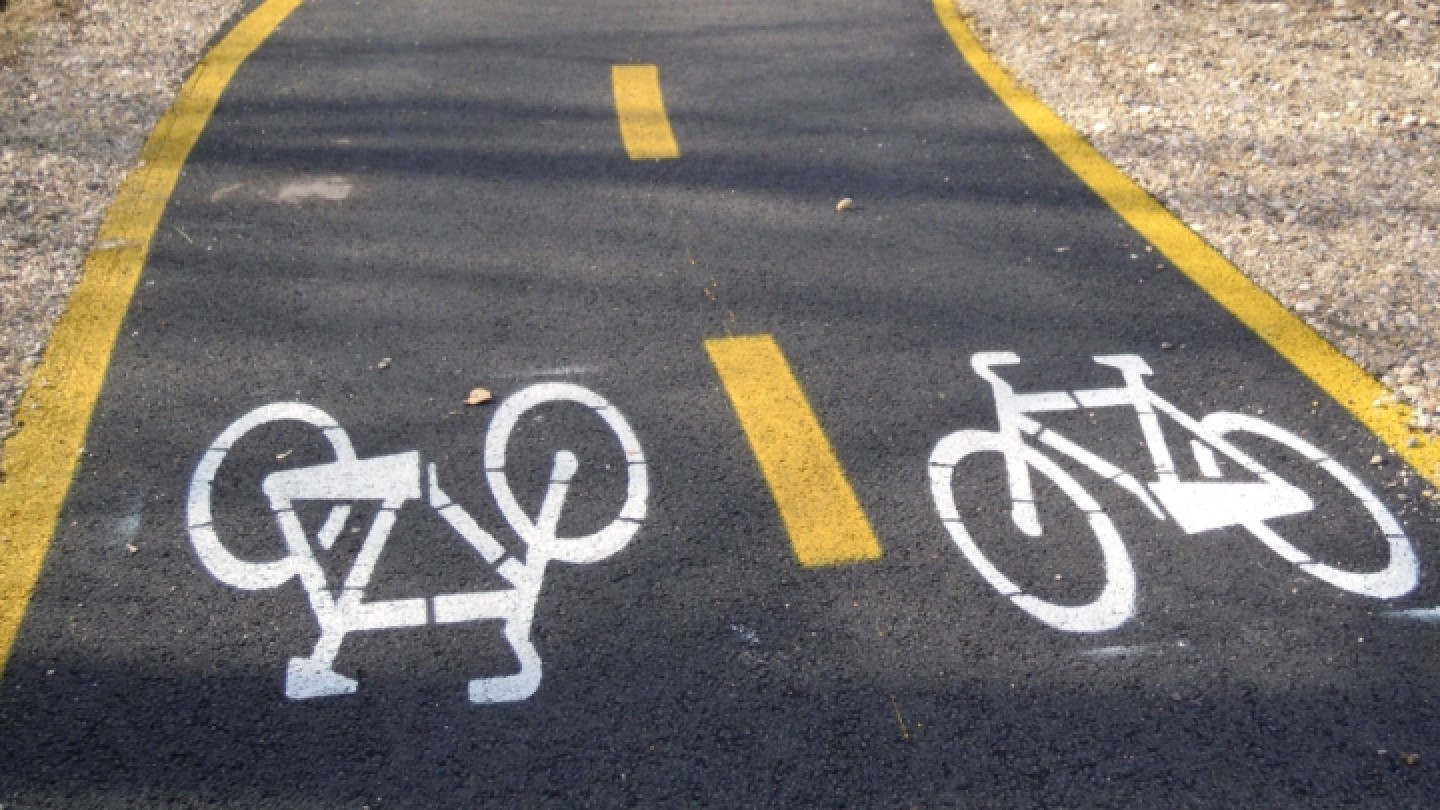
Cycle routes, bicycle paths and “pedestrian zones”
- Allocation for the planning and the implementation of a national and touristic bike-route system, bicycle parking stations along with the adoption of measures aiming at fostering urban cycling safety.
- Priority to the following projects: cycle route connecting Verona to Florence (the cycle route of Sole), the one connecting Venice to Turin (Ven-To cycle route), as well as the project connecting Caposele (Avellino) to Santa Maria di Leuca (Lecce) passing through the Campania, the Basilicata and the Apulia Regions (Apulian Aqueduct cycle route) and last but not least Rome’s great ring road for bicycles (Rome’s Grab); for the above mentioned projects 17 million Euros have been allocated for the year 2016 and a sum of 37 million Euros for each of the years 2017 and 2018. A sum of approximately 3 million Euros has been envisaged for the period 2016 – 2018 for the planning and the implementation of touristic walking routes, the so called “paths”. The projects and measures are identified by the Minister of Infrastructures and Transport and in agreement with the Minister of Cultural Heritage, Activities and Tourism with regard to the projects of touristic cycle routes. Available resources come from the exclusion from the benefit of income tax credit for those road haulers driving vehicles with emission standards lower than EURO 2 standard level.
LPT (Local Public Transport) Renewal of road vehicle fleet
- Financing of the Fund for the direct purchase of road vehicle fleet through specialized companies, along with the upgrading of electric vehicles and the hiring of those ones for local and regional public passenger transport.
- Setting up of a special Fund in the Ministry of Infrastructures and Transport for the direct purchase of buses and local trains through specialized companies with the aim of introducing innovative solutions to promote the renewal of fleet vehicles. The available resources are of approximately 430 million Euros for the period 2019-2022.
Road Haulage Sector
- The use of devices or detection equipment to punish traffic offences;
- The introduction of tax relief on an experimental basis in order to promote the employment for the international transport drivers and increase the use of vehicles equipped with digital tachograph;
- Measures to promote the purchase of last generation vehicles for the carriage of goods by road;
- Measures to discourage unauthorized cabotage services, imposing the obligation to exhibit the transport document, proving the international freight transport, to controlling bodies.
- Incentives of up to 8 thousand Euros for using no longer motor caravans and of up to 2 thousand euros for buying motor caravans with not lower standards than EURO 5 emission standard level.
Maritime and Air Transport services to Islands
- 6,5 million Euros will be allocated to ensure maritime connections, actually agreed with the Region of Sardinia, also through the continuation of the contract with La Marittima Saremar S.p.a.
- The granting to Sicilian Region of a sum of approximately 20 million Euros for the year 2016 in order to ensure complete and efficient air links to and from Sicily.
OTHER MEASURES
Road Maintenance
- It is possible for ANAS (Italian National Roads Authority) to stipulate agreements with Regions and Local Authorities in order to take over the functions related to the design, implementation, maintenance and management of roads which are not part of motorway network and of national road network, for an amount of 100 million Euros.
Railway Sector
- As regards the functioning of “Alpine Railway Highway” (Autostrada Ferroviaria Alpina, 21 million Euros have been allocated for the period 2016 - 2018, in addition to contributions of approximately 10 million Euros to compensate for Alpine Railway Highway services.
In order to cover the costs related to the functioning of the Alpine Railway Highway passing through the Frejus Rail Tunnel, a total expenditure of 29,026.383 million Euros for the period 1 January 2013 – 30 June 2018 has been authorized, of which 2,226.383 million Euros to cover the last period of the experimental phase starting from 1 January 2013 until 30 June 2013 and which have already been authorized by the European Commission and 26,8 million euros envisaged for the transitional period starting from 1 July 2013 to 30 June 2018, of which 2,6 million Euros for the period 1 July 2013 - 31 December 2013, 5,4 million Euros for each of the years from 2014 to 2017 and 2,6 million Euros for the period starting from 1 January 2018 to 30 June 2018. The expenses referred to the first period amount consequently to 21,026.383 million Euros for the year 2016, 5,4 million Euros for the year 2017 and 2,6 million Euros for the year 2018.
For each of the years starting from 2018 to 2022 a contribution of 10 million Euros has also been authorized to compensate fully or in part the costs arising from the rail services’ operating, performed by Alpine Railway Highway through the railway crossing between France and Italy, in particular trough the Frejus Rail Tunnel. - The resources allocated for the construction of the Turin-Lyons high-speed railway line, are transferred to Italian National Railway Company (RFI) pending the program agreement renewal. The rule enables to ensure the continuity of the funding previously allocated for TELT – Tunnel Euralpin Lyon-Turin Company, founded in 2015.
- In order to tackle the serious financial situation of the “Ferrovie del Sud-est e Servizi Automobilistici” Company, the appointment of an external Commissioner was agreed as well as the allocation of approximately 70 million Euros to cover the Company’s activities.